Are THC Vapes Legal in the UK? UK Law Explained in 2026
Are THC Vapes Legal in the UK?, Last checked: As of 2026, UK drug law is subject to change, and enforcement guidance is updated periodically — always check GOV.UK directly for the latest position before relying on this article.
If you’ve searched for whether THC vapes are legal in the UK, the short answer is: no, not for general sale or recreational use. THC is a controlled substance, and vaping it doesn’t change that. But the full picture is more nuanced than a one-line answer, especially once you bring medical cannabis, CBD, and the newer “grey area” cannabinoids into the conversation — and once you consider that a completely separate law banned disposable vapes in 2025, which has nothing to do with THC at all.
This article sets out the current legal position as clearly and accurately as possible, based on UK legislation and government guidance, so you know exactly where you stand. Check on Best THC vapes Shop UK.
Are THC Vapes Legal in the UK? The short answer
Recreational THC vapes are illegal to possess, sell, produce or supply anywhere in the UK. Cannabis and THC (tetrahydrocannabinol) are controlled under the Misuse of Drugs Act 1971, and vaping THC oil, distillate or extract is treated the same way in law as any other form of cannabis use. There is no legal recreational market for THC vapes in England, Scotland, Wales or Northern Ireland. Learn more on Indica THC Vapes UK.
There is one narrow, genuine exception: cannabis-based products for medicinal use, including some vape formats, can be legally prescribed by specialist doctors and dispensed through UK pharmacies. That’s a regulated medical pathway, not a general retail one — and it looks nothing like buying a vape or Pre roll in the UK off a shelf or a website.
THC, CBD, medical cannabis, recreational cannabis: what’s the difference?
These four terms get used loosely online, so it’s worth being precise, because the law treats them very differently.
THC (tetrahydrocannabinol) is the main psychoactive compound in the cannabis plant — the one that produces a “high.” It’s classified as a Class B controlled drug under the Misuse of Drugs Act 1971, alongside substances such as ketamine and amphetamines. Class B possession carries penalties of up to five years in prison, an unlimited fine, or both, and supply or production carries up to 14 years in prison.
CBD (cannabidiol) is a different, non-intoxicating compound also found in the cannabis plant. It doesn’t produce a high. CBD products are legal to sell in the UK provided they come from an approved industrial hemp source and contain only negligible, tightly limited amounts of controlled cannabinoids — in practice, no more than around 1mg of THC per container — and they must comply with Food Standards Agency novel food rules. CBD and THC are chemically related but legally worlds apart.
Medical cannabis refers to cannabis-based products for medicinal use (CBPMs) that have been legally prescribed to a specific patient by a specialist doctor. These are lawful for that patient to possess, in that form, because a prescription and dispensing pharmacy sit behind it. It is not a general legalisation of THC — it’s a tightly controlled medical exception, explained in more detail below.
Recreational cannabis — cannabis or THC used, bought or possessed outside of a medical prescription, purely for its intoxicating effects — remains illegal throughout the UK, including Cannabis Concentrates. This is the category that a THC vape bought online, from a dealer, or brought back from a country where cannabis is legal, falls into.
For a broader breakdown of cannabis, THC, CBD, hemp and related regulation, see our UK cannabis and cannabinoid laws guide.
Are THC Vapes Legal in the UK? The legal framework: Misuse of Drugs Act 1971
The core law is the Misuse of Drugs Act 1971, which divides controlled drugs into Class A, B and C according to perceived harm. Cannabis has been classified as Class B since 2009 (having briefly been Class C between 2004 and 2009). Under this Act:
-
- Possession of cannabis or THC without lawful authority (such as a prescription) is a criminal offence.
-
- Production — including extracting or concentrating THC, for example to make vape oil — is a criminal offence.
-
- Supply, including selling it, giving it away, or passing round a vape containing THC oil, is a criminal offence.
-
- Cultivation of the cannabis plant without a Home Office licence is a criminal offence.
The maximum penalty for possession on indictment is five years’ imprisonment or an unlimited fine, or both; for production or supply, it rises to 14 years’ imprisonment or an unlimited fine, or both. In practice, a first-time possession offence involving a small personal quantity is far more likely to result in a police warning, a caution or a fixed penalty notice than a prison sentence — the Crown Prosecution Service’s own guidance notes that a caution may be appropriate in some lower-level circumstances — but that’s prosecutorial discretion, not a legal right, and outcomes vary by force, circumstances and any aggravating factors.
Crucially, the format makes no legal difference. The Act doesn’t distinguish between smoking dried flower, eating an edible, or vaping an oil or distillate. If a product contains THC above the negligible trace levels permitted in CBD products, and you don’t have a valid prescription for it, possessing it is unlawful regardless of the device it’s in.
This law applies uniformly across the whole UK. Drug classification and possession penalties are decided at Westminster and are not devolved, so the legal position is the same in England, Scotland, Wales and Northern Ireland — although, as noted below, prosecutorial approach can vary slightly between forces and nations.
Medical cannabis: the genuine legal exception
Since 1 November 2018, doctors on the General Medical Council’s specialist register have been able to prescribe cannabis-based products for medicinal use, following a change to the Misuse of Drugs Regulations 2001. This rescheduled qualifying cannabis-based medicinal products out of the most restrictive Schedule 1 category, while cannabis itself remained controlled as a Class B drug and the penalties for unauthorised supply, possession and cultivation stayed unchanged.
A few things about this route matter for anyone asking about THC vapes specifically:
-
- Only two cannabis-based medicines currently hold a full UK marketing authorisation (a standard product licence): Sativex (nabiximols) and Epidyolex (a highly purified form of CBD). Neither of these is a vape product.
-
- Beyond those two licensed medicines, specialist doctors can prescribe unlicensed cannabis-based products — which can include vape-format oils like Grab and Dab diamond infused 2g carts or dried flower for vaporisation — on a case-by-case clinical basis. These prescriptions are overwhelmingly issued through private specialist clinics rather than the NHS, since the government confirmed in November 2024 that it had no plans to widen NHS access further. Reported patient numbers for the private medical cannabis sector vary considerably between industry sources and aren’t something we can verify against an official government count, so we haven’t repeated a specific figure here.
-
- If you are prescribed a THC-containing product and it’s dispensed by a licensed UK pharmacy against a valid prescription, possessing and using it as directed is lawful. Carrying evidence of that prescription is sensible, particularly if you’re travelling or might be questioned.
-
- A prescription from outside the UK does not by itself give you the right to bring THC products into the country. Anyone in that position should look at the Home Office’s guidance on personal import licences before travelling, rather than assuming a foreign prescription will be recognised at the border.
It’s also worth being clear that medical cannabis access sits almost entirely outside the free NHS system in practice. This is a genuinely underreported point: people sometimes assume “medical cannabis is legal” means it’s readily and affordably available through a GP. In reality, NHS prescribing is narrow and reserved for a small number of licensed indications, and most patients access CBPMs by paying privately.
THC vapes and driving: a separate legal trap
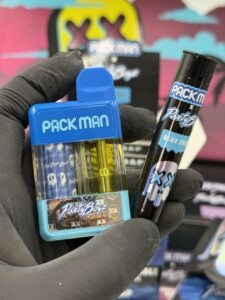
This is a point competing articles often skip, and it matters even for people who assume they’re in the clear. Under the Drug Driving (Specified Limits) (England and Wales) Regulations 2014, made under section 5A of the Road Traffic Act 1988, it is an offence to drive, or be in charge of a vehicle, with THC in your blood above a specified limit — set at 2 micrograms per litre of blood, one of the lowest thresholds of any drug on the list. Similar rules apply in Scotland.
This is a strict-liability offence: the prosecution doesn’t need to prove you were actually impaired, only that your blood THC exceeded the limit. Because the threshold is so low, someone using THC — including via prescribed medical cannabis — can test over the limit long after any noticeable effect has worn off. There is a statutory medical defence available to people using Kaws Moonrock cannabis lawfully under a valid prescription, taken as directed, but it isn’t automatic: it has to be established with evidence, doesn’t apply if your driving was actually impaired, and doesn’t cover cannabis obtained outside the prescribed, lawful route. This is a legal defence to raise in court, not a guarantee against being stopped, tested or arrested in the first place.
What about CBD vapes, hemp, and “legal” cannabinoids?
Because THC vapes are illegal, a market has grown up around products marketed as legal alternatives. It’s worth understanding where each of these actually stands.
CBD vapes are legal to sell and possess provided they meet the conditions above: derived from approved hemp, negligible controlled cannabinoid content, and compliant with Food Standards Agency novel food registration. They are not required to contain nicotine, and many don’t.
Industrial hemp can be grown legally in the UK, but only under a Home Office licence, using approved low-THC seed varieties, with the plant’s THC content capped at no more than 0.2%. Even then, the licence covers uses like fibre and seed oil from the stalks and seeds — the flowers and leaves remain a controlled part of the plant and can’t be used, which is why CBD extracted from UK-grown hemp flower isn’t straightforwardly legal even at low THC percentages.
Other cannabinoids — compounds like HHC, HHC-O, THCV, delta-8 or delta-10 THC, sometimes sold as vape products — sit in a genuinely contested area of law. Some, like THCV, are explicitly controlled as Class B drugs in their own right. Others aren’t individually named in the Misuse of Drugs Act, but the Psychoactive Substances Act 2016 separately prohibits producing or supplying any substance capable of producing a psychoactive effect in a person who consumes it, unless it’s specifically exempted (as alcohol, caffeine, nicotine and licensed medicines are). Whether a given semi-synthetic cannabinoid falls foul of that Act is not always settled; retailers selling them are operating with real legal risk, and this is an area where the law and enforcement approach could shift. If a product is marketed as giving a “legal high,” treat that marketing claim with real scepticism rather than as a legal fact.
A common point of confusion: the disposable vape ban
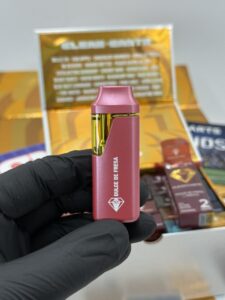
Since June 2025 there’s been a lot of news coverage about vapes being “banned” in the UK, and it’s easy to conflate that with THC law. It’s a completely different piece of regulation. From 1 June 2025, it became illegal for businesses to sell or supply single-use (“disposable”) vapes in the UK, regardless of whether they contain nicotine. This ban is about environmental waste and youth vaping prevention under the wider Tobacco and Vapes Bill, and it applies to ordinary nicotine and non-nicotine e-cigarettes sold on the high street — it has nothing to do with THC content and doesn’t make any additional category of THC product legal or illegal. If you see headlines about vapes being banned, that’s this rule, not a change to cannabis law.
Buying, importing or travelling with THC vapes
A few practical points, stated factually rather than as advice on how to avoid detection:
-
- Buying a THC Disposable vape from an overseas website and having it shipped to the UK does not make it legal. Importing cannabis or THC products is itself a separate offence, and Border Force / Royal Mail routinely intercept such shipments.
-
- Bringing a THC vape back from a country or US state where cannabis is legally sold — for personal use — does not exempt you from UK law. UK law applies from the moment the product enters the country, irrespective of where or how legally it was purchased abroad.
-
- None of this changes because a seller labels a product as “legal,” “hemp-derived,” or “under 0.3% THC” (a US legal threshold that has no equivalent status in UK law).
THC Vape UK Legit: What Does “Legit” Actually Mean?
“THC vape UK legit” is a common search because consumers may use the word legit in several different ways.
It could mean:
Is the product authentic?
Does it contain what the packaging claims?
Has it undergone meaningful laboratory testing?
Is the seller genuine?
Is the product legally supplied in the UK?
These questions should not be treated as interchangeable.
Professional-looking packaging, QR codes, batch numbers and laboratory-report images do not by themselves establish that a THC vape has been legally supplied in Britain.
Likewise, a product corresponding to a genuine overseas cannabis brand like Raw garden Live Resin all in one vape UK does not automatically become legal for retail sale in the UK.
For consumers, the legal supply chain is particularly important because products obtained through unregulated sources may not provide reliable information about their ingredients, cannabinoid concentration or manufacturing standards.
The NHS warns that many cannabis-based products offered online have unknown quality and content and may be illegal and potentially dangerous.
Authenticity and Safety Are Different Questions
A vape can potentially be an authentic product manufactured somewhere cannabis is legally regulated while still not being lawfully supplied to a UK consumer.
Conversely, convincing packaging can be copied.
This is why evaluating an unknown THC cartridge based purely on logos, packaging quality, or online reviews is unreliable but you can Order Wholemelt disposable carts in the UK from Us.
THC Vape UK Reviews: How Much Should You Trust Online Reviews?
Reviews can be useful for ordinary consumer products, but THC vape UK reviews require additional caution.
A positive review cannot independently establish what was inside a cartridge.
Reviewers may comment on flavour, packaging, apparent potency, or device performance without having laboratory evidence confirming the contents.
Consumers should therefore distinguish between subjective experience and verifiable information, Thats why we always recommend good and realible thc vape brands like Boutiq Switch V5 UK.
Warning Signs in Online THC Vape Content
Information deserves additional scrutiny when it:
- claims that recreational THC vaping is completely legal throughout the UK;
- guarantees that an illicit product will pass through law-enforcement or customs controls;
- markets extremely high potency without meaningful safety information;
- uses a laboratory-report image that cannot be connected reliably to the actual product;
- claims a product is “medical grade” without explaining its regulated medicinal supply chain;
- suggests that a QR code alone proves legality or safety.
Independent medical and government information should carry considerably more weight than anonymous testimonials.
Best THC Vape UK: Why “Best” Is Difficult to Define
Searches for the best THC vape UK often resemble ordinary consumer-product searches.
However, ranking unregulated recreational THC products as though they were ordinary electronics can be misleading.
For educational purposes, a more useful interpretation of “best” is understanding what characteristics matter when evaluating a legally prescribed or otherwise lawful cannabis-based product.
These can include:
Known composition: Patients should know what they have actually been supplied.
Cannabinoid information: THC and CBD content can significantly affect a product’s characteristics.
Traceability: Proper medicinal supply chains provide substantially greater accountability than anonymous products.
Professional oversight: Medical cannabis should be used according to the directions provided by the prescriber and dispensing pharmacy.
Appropriate device: Where vaporisation forms part of prescribed treatment, patients should follow the instructions accompanying their medicine rather than improvising with unknown hardware.
The highest THC percentage should therefore not automatically be interpreted as meaning “best.”
Higher THC exposure can also increase risks and adverse effects.
THC Vape UK Next Day Delivery: What Consumers Should Understand
Search phrases such as THC vape UK next day delivery can give the impression that THC products are equivalent to ordinary online retail products.
Delivery speed does not determine legality.
A website offering next-day shipping does not prove that the underlying product can legally be supplied or possessed.
This distinction becomes particularly important with cannabis because professional ecommerce design, customer reviews, tracking systems and sophisticated packaging can make an unregulated seller appear similar to a conventional retailer.
For legitimately prescribed medicinal cannabis, dispensing and delivery operate through appropriate pharmacies and healthcare arrangements.
Patients should use the instructions provided by their clinic or pharmacy regarding receiving prescribed controlled medicines.
THC Vapes UK Delivery and Online Advertising
The same principle applies to searches for THC vapes UK delivery.
Online availability and legal availability are not the same thing.
A website can technically be accessible from Britain while operating elsewhere or offering products that do not comply with British law.
Consumers should therefore avoid assuming that:
“Ships to the UK” means “legal in the UK.”
Likewise, claims such as “UK stock,” “24-hour shipping” or “discreet delivery” do not establish regulatory compliance.
For cannabis-based medicinal products, the relevant question is whether the medicine has been lawfully prescribed and supplied through the appropriate medical/pharmacy system.
Frequently asked questions about THC Vapes in the UK
Is it illegal to vape THC in the UK? Yes, unless you’re using a product that has been legally prescribed to you by a specialist doctor and dispensed by a UK pharmacy. Recreational THC vaping, using any device, is a Class B drug offence.
Can I buy a THC vape online in the UK? No legitimate, lawful retail market exists for recreational THC vapes in the UK. Sites claiming to ship “legal” THC vapes to UK addresses are not operating within UK law, and importing the product doesn’t change that.
Is CBD vaping legal? Yes. CBD vape products are legal provided they’re derived from approved hemp sources, contain only negligible/trace amounts of controlled cannabinoids, and meet Food Standards Agency labelling and novel food requirements.
Can a doctor prescribe a THC vape in the UK? In principle, yes — a specialist doctor on the GMC specialist register can prescribe an unlicensed cannabis-based product, which can include vaporisable formats, where clinically justified. This is almost always accessed via private specialist clinics rather than the NHS, and it’s a prescription-only medical product, not a retail one.
What happens if I’m caught with a THC vape? This depends on the circumstances, the quantity, and police/prosecutorial discretion. A first offence involving a small amount for personal use is more likely to result in a warning, caution, or fixed penalty notice than prosecution, but it can still lead to arrest, prosecution and a criminal record, particularly for repeat offences or if supply is suspected. Penalties on conviction can reach five years’ imprisonment for possession and 14 years for production or supply.
Does having a medical cannabis prescription protect me from a drug-driving charge? Only partially, and not automatically. The THC drug-driving limit is extremely low (2 micrograms per litre of blood), and prescribed users can easily test over it. A statutory medical defence exists but must be established with evidence and doesn’t apply if your driving was actually impaired.
Are THC vapes legal in Scotland, Wales or Northern Ireland if they’re not in England? No — cannabis and THC classification is set at Westminster and applies uniformly across the whole UK. There is no part of the UK where recreational THC vapes are legal.
Is the 2025 disposable vape ban related to THC? No. That ban covers single-use e-cigarettes generally (nicotine or not) for environmental and youth-vaping reasons, and is unrelated to THC’s controlled-drug status.
Conclusion
As of August 2026, THC vapes remain illegal for recreational use anywhere in the UK. THC’s status as a Class B controlled drug under the Misuse of Drugs Act 1971 applies regardless of the product format, so vaping doesn’t create a loophole around cannabis law. The one lawful route to THC is a specialist medical prescription — a narrow, clinically gated pathway, mostly delivered privately, and very different from a retail purchase. CBD, by contrast, occupies genuinely legal territory when it’s properly sourced and compliant. Because this is an area where enforcement practice, novel cannabinoids, and medical access are all actively evolving, it’s worth checking GOV.UK and official sources directly for the latest position before making any decisions, rather than relying solely on retailer or clinic marketing material.