Can THC Vapes Cause Cancer? A Comprehensive UK-Focused Analysis
Introduction: Understanding THC Vaping and Cancer Risk in the UK.
The question of whether THC vapes can cause cancer is becoming increasingly important as vaping culture grows across Europe and the UK. THC (tetrahydrocannabinol) is the psychoactive compound in cannabis, and vaping it has been marketed as a “cleaner” alternative to smoking. However, emerging evidence suggests that while vaping may reduce exposure to some harmful byproducts of combustion, it does not eliminate health risks—especially when it comes to long-term diseases like cancer. Explore Cannabis Concentrates.
Health organisations such as Cancer Research UK and UK Health Security Agency consistently highlight a key issue: the long-term effects of vaping—including THC vaping—are still not fully understood. This uncertainty is particularly concerning when users assume vaping is completely safe.
What Are THC Vapes and How Do They Work?
THC Vape Devices Explained – THC Vapes Cancer UK.
THC vapes are electronic devices that heat cannabis extracts into an aerosol that users inhale. Unlike traditional smoking, there is no combustion, which means fewer tar-related toxins are produced.
Key Components of THC Vape Liquids
Typical THC vape cartridges may contain:
- THC distillate or cannabis oil
- Thinning agents (such as propylene glycol or vegetable glycerin)
- Flavouring chemicals
- Sometimes, contaminants in unregulated products
While these ingredients may sound harmless individually, heating them can produce new chemical compounds, some of which may be carcinogenic.
Can THC Vapes Cause Cancer?
What Science Currently Says about THC Vapes Cancer UK.
There is no definitive long-term study proving that THC vapes directly cause cancer. However, that does not mean they are safe. The key concerns include:
- Formation of formaldehyde and acetaldehyde during heating
- Exposure to heavy metals from vape coils
- Potential inhalation of unknown additives in illicit cartridges
According to Cancer Research UK, vaping exposes users to fewer carcinogens than smoking, but still involves potentially harmful substances.
The Problem of Long-Term Evidence
Cancer often takes years or decades to develop. Since vaping is relatively new, scientists simply do not yet have enough long-term data to rule out cancer risks.
Why THC Vapes May Still Be Cancer-Prone
Chemical Exposure Risks
Even without combustion, THC vaping can expose users to:
- Volatile organic compounds (VOCs)
- Ultrafine particles that penetrate deep into the lungs
- Thermal degradation byproducts
Illicit THC Cartridges and Added Risk
In the UK and Europe, many THC vape products are unregulated, increasing the risk of contamination.
Examples of harmful additives:
- Vitamin E acetate (linked to lung injuries)
- Synthetic cannabinoids
- Pesticide residues
These substances may significantly increase toxicity and potential carcinogenic exposure.
Comparing THC Vapes with Other Methods
THC Vapes vs Tobacco Cigarettes (Cancer Risk Comparison)
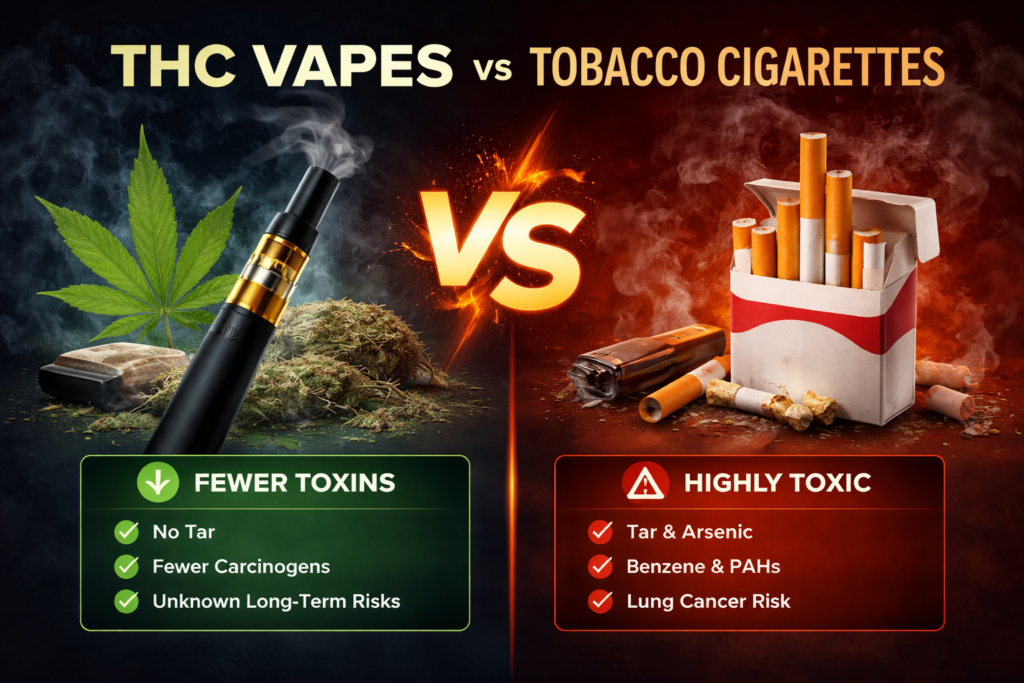
Tobacco cigarettes are widely recognised as one of the leading causes of cancer.
Key Differences:
- Cigarettes produce over 70 known carcinogens
- THC vapes generally produce fewer toxic compounds
- However, THC vapes still expose users to unknown long-term risks
Conclusion:
Cigarettes are more strongly linked to cancer, but THC vapes are not risk-free and may still pose long-term dangers.
THC Vapes vs Hookah (Shisha Smoking Cancer Risk)
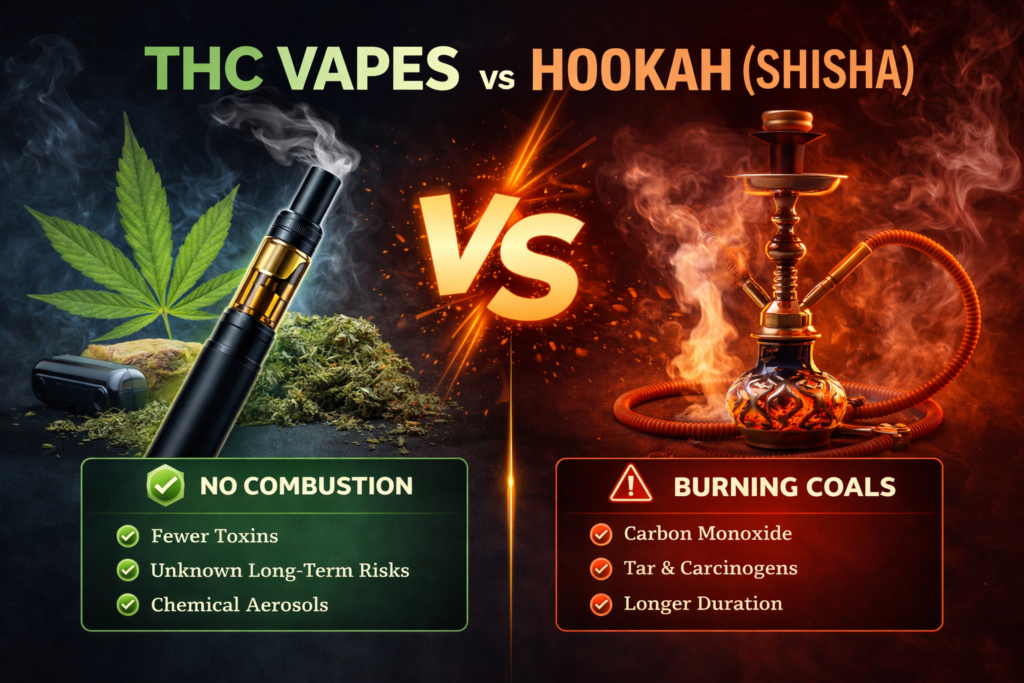
Hookah smoking is often perceived as safer, but this is misleading.
Facts:
- Hookah smoke contains carbon monoxide, tar, and carcinogens
- Sessions last longer, increasing exposure
- THC vapes avoid combustion but still deliver heated chemicals
Conclusion:
Hookah may expose users to higher immediate toxin levels, but THC vapes carry uncertain long-term cancer risks due to chemical aerosols.
THC Vapes vs Smoking Weed (Cannabis Combustion)
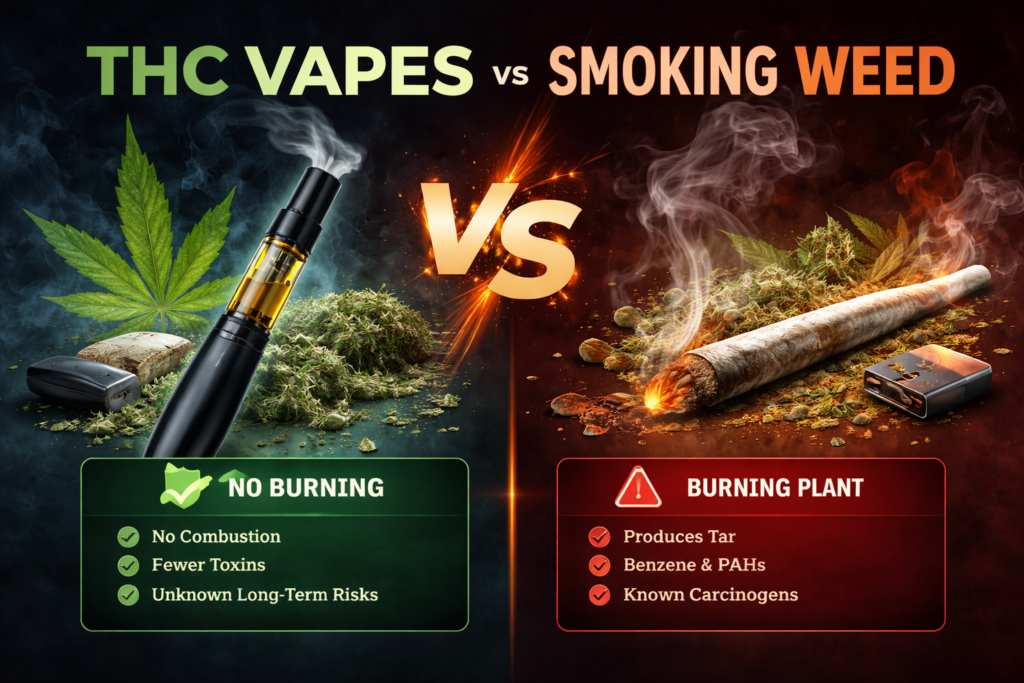
Smoking cannabis involves burning plant material, which creates:
- Tar
- Benzene
- Polycyclic aromatic hydrocarbons (PAHs)
These are known carcinogens.
Comparison:
- THC vaping reduces exposure to combustion toxins
- However, it introduces chemical vapor risks instead
Conclusion:
Smoking weed is more clearly harmful, but vaping still carries potential cancer-related risks that are not fully understood.
THC Vapes vs Edibles (Safest Option?)
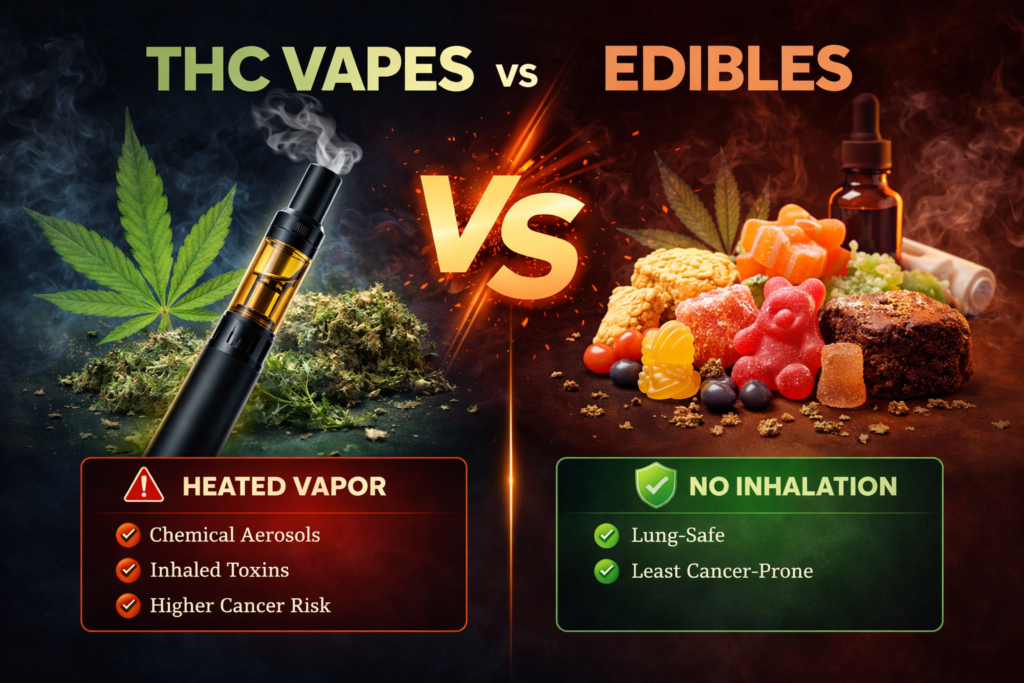
Edibles (such as THC-infused foods) do not involve inhalation.
Benefits:
- No lung exposure
- No combustion or vaporisation
Risks:
- Overconsumption
- Delayed effects
Conclusion:
Edibles are likely the least cancer-prone method, as they avoid inhalation of harmful substances altogether.
UK Perspective on THC Vaping Safety
Regulatory Challenges on THC Vapes Cancer UK.
THC products are tightly restricted in the UK. This creates a market where many vape products are:
- Imported
- Unregulated
- Poorly tested
Public Health Warnings
The NHS advises caution with any inhaled substances, especially those not regulated for safety.
Key Cancer Risk Factors in THC Vaping
Frequency of Use
Regular exposure increases cumulative risk.
Product Quality
Unregulated products are significantly more dangerous.
Device Temperature
Higher temperatures increase the formation of toxic compounds.
Symptoms and Early Warning Signs
While not specific to cancer, users should be aware of:
- Persistent cough
- Chest pain
- Shortness of breath
- Unusual fatigue
These may indicate lung irritation or more serious conditions.
Harm Reduction Strategies
Avoid Illicit Products
Use only regulated sources (where legal).
Lower Temperature Settings
Reduces harmful byproducts.
Limit Frequency
Less exposure = lower risk.
The Future of Research on THC Vaping and Cancer
Scientific research is ongoing. Over the next decade, we expect:
- Long-term epidemiological studies
- Better regulation
- Clearer conclusions on cancer risk
Until then, uncertainty remains.
Conclusion: Are THC Vapes Cancer-Causing?
THC vapes are not proven to cause cancer directly, but they are also far from harmless. Compared to tobacco and hookah, they may expose users to fewer known carcinogens. However, compared with edibles, they are significantly more hazardous due to the inhalation of heated chemicals.
The biggest concern is uncertainty. Without long-term data, it is impossible to confidently say that THC vaping does not increase cancer risk. Combined with the dangers of unregulated products, users should approach THC vaping with caution.
Final Takeaway on THC Vapes Cancer UK.
- Less harmful than cigarettes ≠ , safe
- Safer than smoking weed ≠ harmless
- Risk depends heavily on product quality and usage
In the UK context, where regulation is strict and supply chains are unclear, THC vaping carries real and potentially underestimated health risks—including possible links to cancer over time.